
Advocacy & Research / Advocacy
Advocating for People Living with Blindness and Vision Loss in Canada
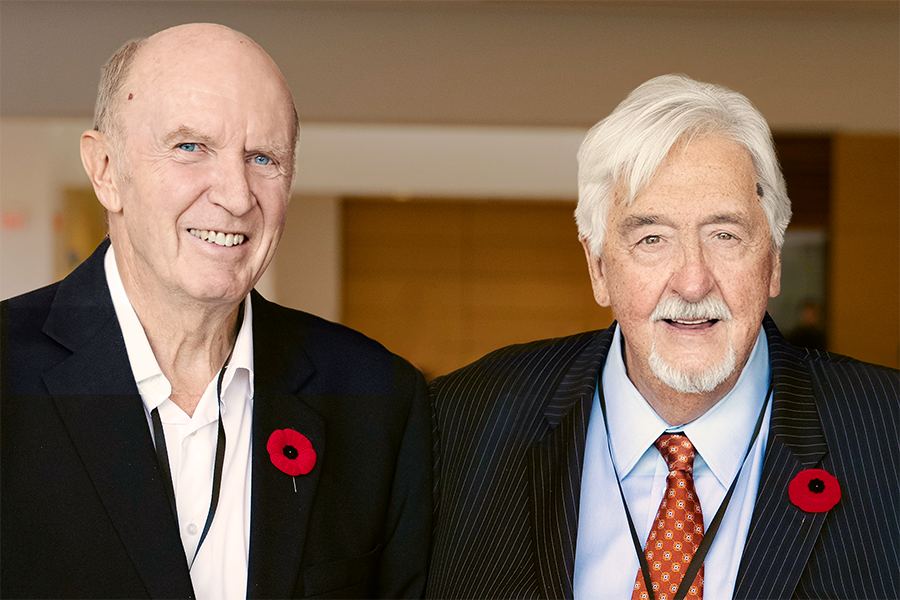
Consistent with their work from 2018 to the present, Dr. Keith Gordon and Michael Baillargeon continue to be influential advocates for people living with blindness and partial sight in Canada. Their initiatives, documented through extensive research reports such as the landmark “Cost of Vision Loss and Blindness in Canada” study and the annual “Report Card on Vision Health in Canada,” consistently highlight the community’s unique vulnerabilities. A central conclusion from their research, specifically from “The Impact of the COVID-19 Pandemic on Canadians Who Are Blind, Deafblind, or Have Low Vision,” which was published in the Journal of Visual Impairment & Blindness, is that Canadians with vision loss faced disproportionate barriers in accessing healthcare and technology, underscoring the critical need to prioritize them during national crises.
Dr. Gordon and Baillargeon continue to collaborate on research in support of people living with blindness or partial sight, as well as broader research associated with vision health. They are presently key collaborators on a first-of-its-kind in Canada population-based study examining the prevalence of vision loss and eye diseases in Ontario.
In 2022, Dr. Gordon and Baillargeon published a report calling for reform of Ontario’s Assistive Devices Program (ADP), providing evidence-based recommendations to governing bodies that were substantive and reflective of the needs of Ontarians living with vision loss. Their advocacy contributed to the Ontario Ministry of Health’s decision to fully fund white canes for people in Ontario who are blind or partially-sighted.
Their advocacy also played a key role in passing Bill C-284, An Act to establish a national eye care strategy. Along with others, they successfully campaigned for the bill and were instrumental in ensuring that vision rehabilitation was included in its final version. Their research on the pandemic’s impact on eye health provided vital, evidence-based support for this legislative effort, exposing a troubling reality of neglect and increased isolation that made a strong case for the systemic change now required by the Act.
Health Canada, as mandated by Bill C-284, has released its National Strategy for Eye Care. This long-awaited plan calls on governments and partners to improve eye care for everyone. All parties have indicated a renewed commitment to implementing meaningful reforms and securing the government funding needed to support them. Vision Health Canada will continue to advocate for the full implementation of the strategy, with a focus on ensuring its outcomes put people first and support eye care that is accessible, inclusive, and culturally safe.
At Vision Health Canada’s inaugural conference in February 2026, Vision Loss Rehabilitation Canada (VLRC), in partnership with Dr. Gordon, released the findings of its Survey Report 2025, “Living with Vision Loss in Canada.” Authored by Dr. Gordon and Baillargeon, along with Shannon Foster and Ashley Shaw, both from VLRC, this important report explores the experiences of Canada’s blind and partially-sighted community, including access and pathways to service, while creating a national profile of this population.
Parallel to their policy work, Dr. Gordon and Baillargeon have actively advocated to government bodies and Health Canada for expediting access to innovative treatments, ensuring that breakthroughs reach patients faster, thus preventing unnecessary vision loss and improving quality of life for the 1.2 million Canadians living with blindness or partial sight, and the over 8 million Canadians living with an eye disease that could lead to blindness.
Featured Publications
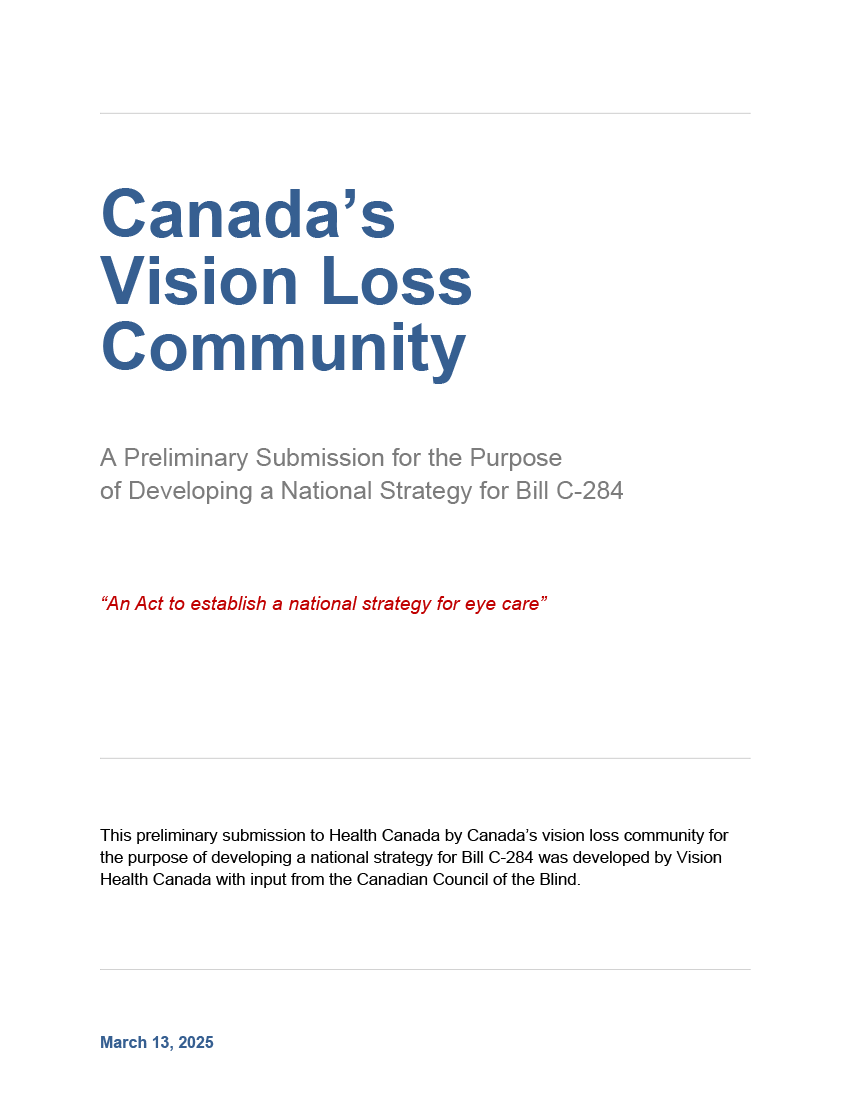
Preliminary Submission Health Canada – March 2025
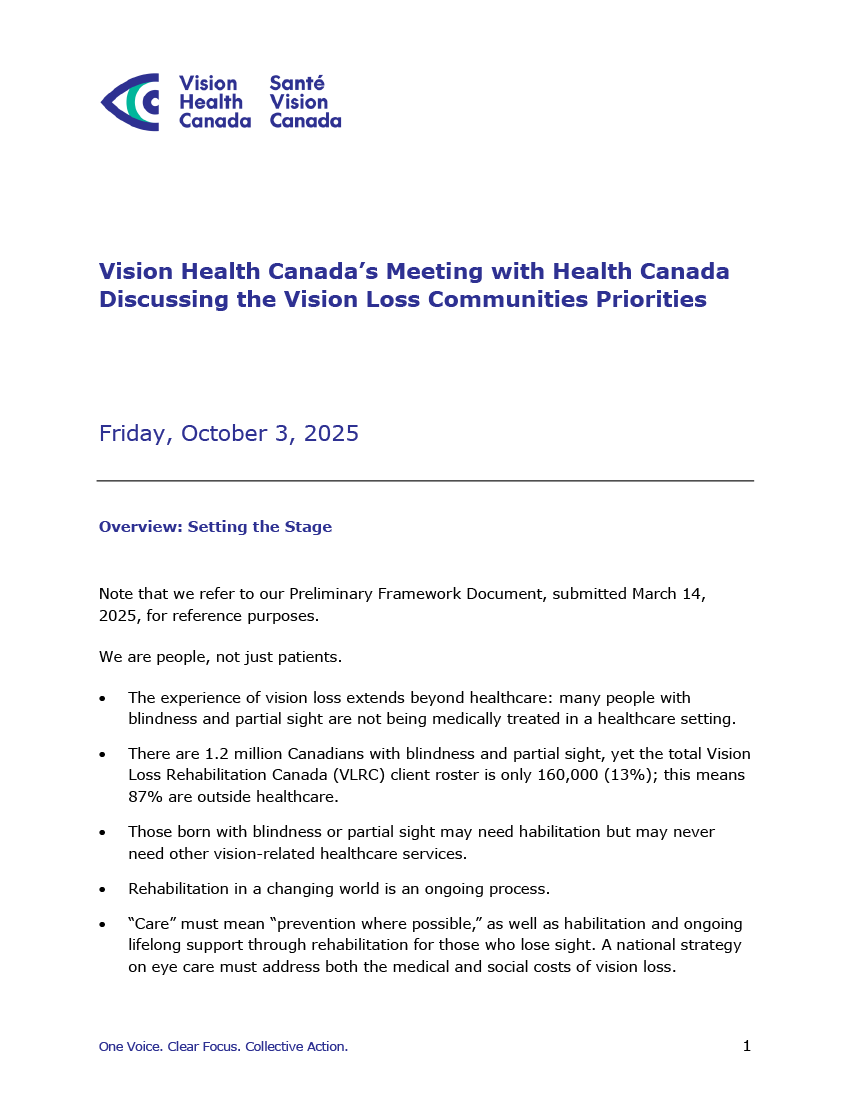
Health Canada Meeting Priority Discussion Points – October 2025

VLRC Survey Report 2025